If you’re a trailer manufacturer, you know some of the unique challenges you’re facing: the growing market for modular, specialized, customized, and versatile trailers; the need for extendable truck trailers that accommodate large industrial components (while balancing weight needs with weight restrictions); the ability to adapt to regulatory compliances and changes in standards (regionally, nationally, and globally); and the impact of all of these challenges on R&D, time to market, and revenue.
If you’re a small to mid-sized company, you have the additional struggle trying to compete with major players that have diversified portfolios, international attention, and economies of scale on their side.
By integrating automated CNC technology into your manufacturing process, you can overcome these — and other — challenges without compromising on quality; and in fact, depending on your current production, may even improve it.
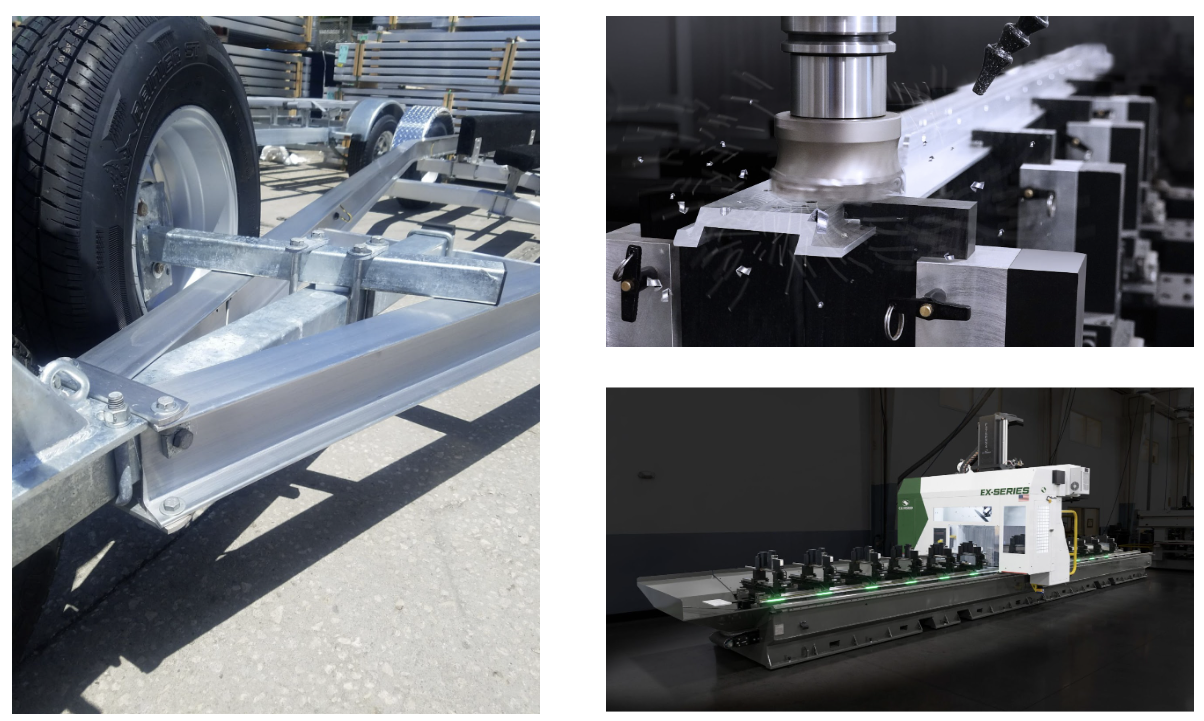 Linear Profile Extrusion Processing to create Frames and Chassis
Make more parts faster and at less cost per part
CNC machinery can help you stay adaptable by streamlining your R&D to machining process, providing you with the capacity to easily launch new products, customize existing ones, and create reliably fitting components, accessories, and replacement parts.
With fluctuation in prices of raw materials, a high-speed CNC machine can help offset those costs. Without increasing your workforce, you can reduce lead and production times, optimize material yield (using nesting operations to reduce material waste), and produce more trailer parts in the same time frame while minimizing the cost for each one of those parts.
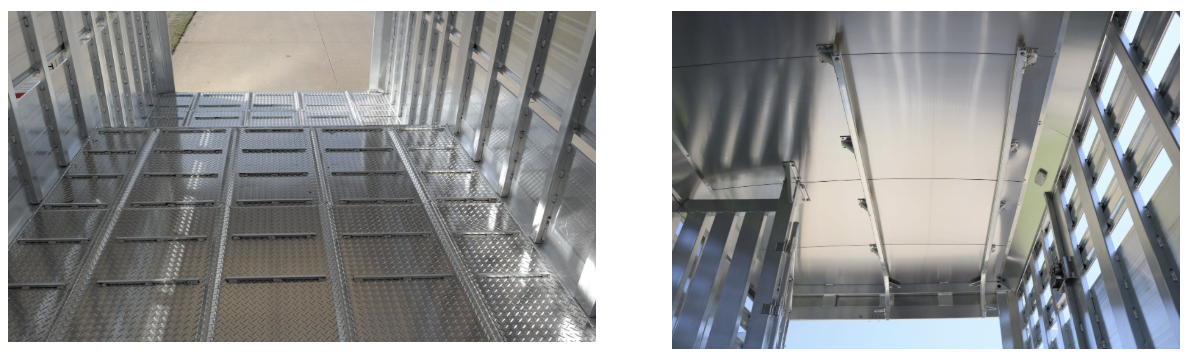 Tread Plates and Interior Frameworks
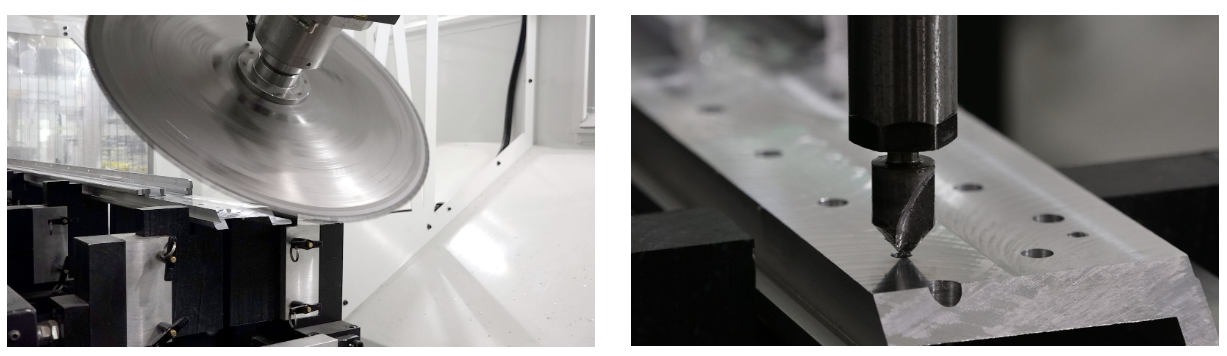 High-Speed Sawing and Drilling
Functional, reliable trailers require a functional, reliable CNC machine
In your industry, you’ve seen the results of low-quality trailers and, most likely, set out to manufacture ones that were built better. The structural integrity of the trailer you manufacture directly correlates to how capable it is handling the loads for which it is intended.
The same is true for CNC machines.
A rigid CNC machine that is structurally reinforced performs better. It runs efficiently, provides top acceleration/deceleration speeds, requires less maintenance and repair costs over its lifetime, and produces high-quality cuts to create the most functional, reliable end product.
Just like a well-built trailer, it may cost more but it’s the return on investment that matters in the long run.
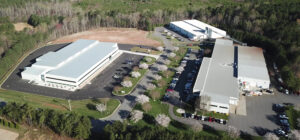
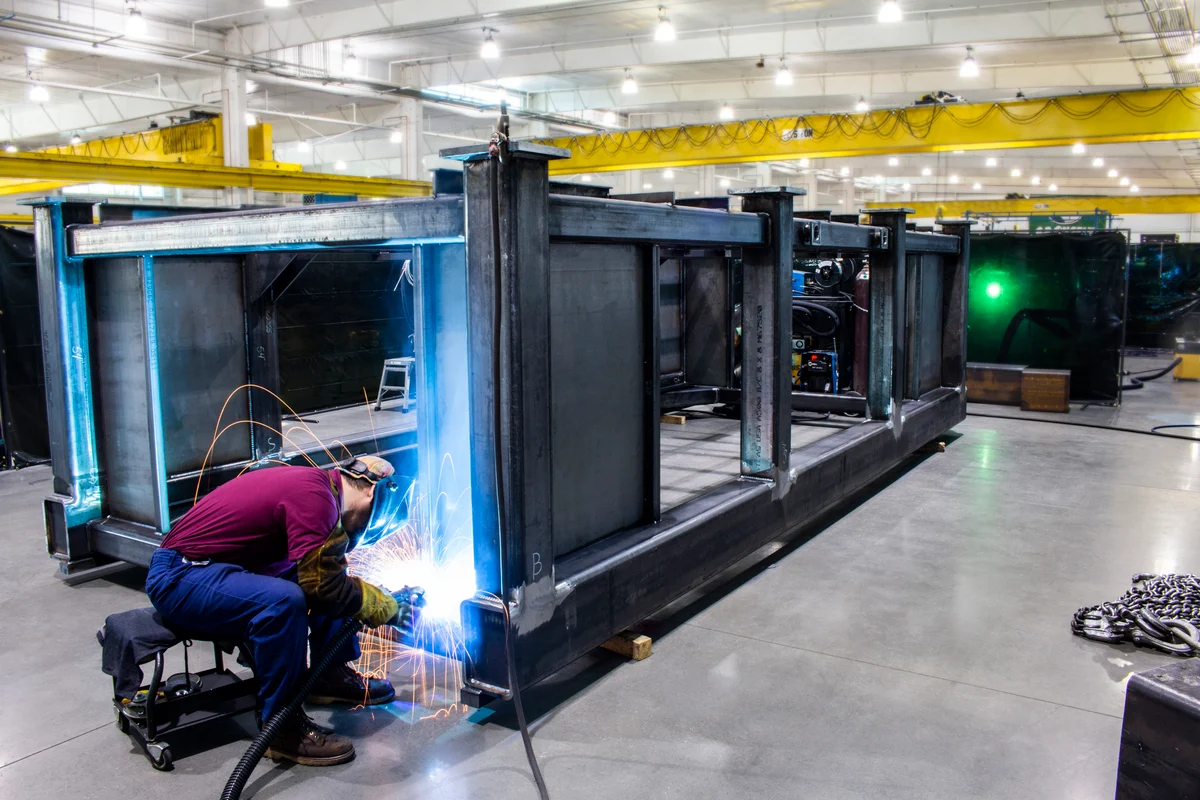 The steel frame of the Q-Series is welded on-site at the C.R. Onsrud factory in North Carolina
Plan for the long haul
With a trailer or a CNC machine, plan for where you’re heading. Some CNC manufacturers offer options and customizations that can help you exponentially: devices that drill a set number of holes simultaneously, automated systems that can assist solo operators handle materials, aggregates that effectively give 5-axis capability to a 3-axis machine, and tons more, too many to list. That’s why it’s important that you work with someone who wants to understand your current production and where you want to go.
Top-quality industrial components are also important. As you know from your own manufacturing, premium components may cost more but are durable and dependable. Also be cautious of machines using proprietary components. They may have a low upfront cost, but trap you into purchasing high-priced, proprietary replacement parts.
Just like trailers need to be serviced, so does a CNC machine to keep it running for the long haul. It’s worthwhile to understand what (or if) service and support is provided, by whom (the OEM? Dealer? Third-party mechanic?), and where they are located. Consider lead time on replacement parts and, if the company offers 24/7 phone support for emergencies, what does it cost?
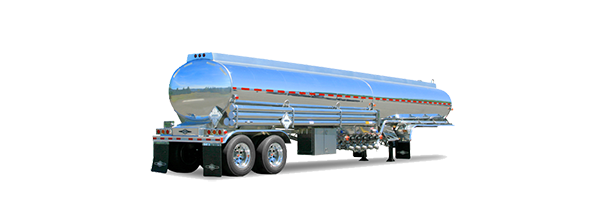
Support large freight loads with large trailer components
If you’re selling to segments that ship very large, sensitive, complex, or heavy loads, the right large-format industrial CNC machine can be invaluable. There are 5-axis heavy-duty machines that are engineered to accurately process 50ft+ linear profile extrusions and others that can accommodate over 100ft lengths with the material weight only limited by the capacity of your factory floor.
Verify that the machine has been engineered to support the large, heavy components. Some machines are designed to handle lightweight extrusions, such as window frames, and then, to make a sale, they are adapted to try to accommodate heavier material. They ultimately fail because, similar to a trailer, a CNC machine needs to be built for its intended purpose.
Be sure to assess the work envelope (a.k.a. work area) as opposed to just the table size. Your work envelope needs to be larger than the largest part being machined and, for 5-axis machining, take into account the space the machine’s spindle needs to operate at 90-degree angles.
With the right CNC machine, you can quickly and easily tackle the big projects: sidewalls, I-beams, cross members, roofs, and much more!
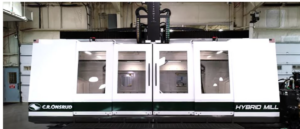
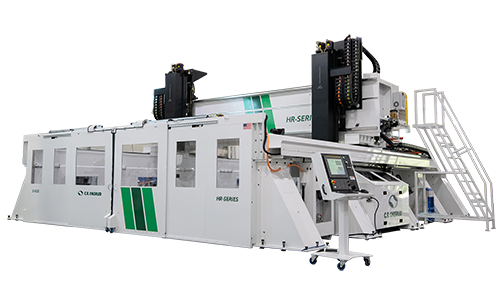 Large-format CNC machinery
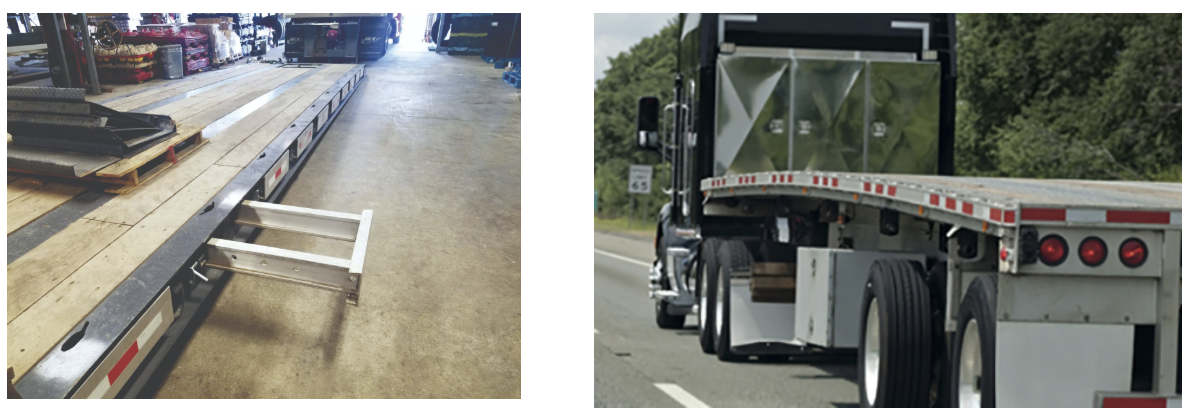 Large I-Beams and Flatbeds
No one-size-fits-all solution
Just like you’re not going to sell a flatbed trailer to someone who needs a mobile kitchen, not all CNC machines are the right fit for all manufacturers. If you use aluminum profile extrusions to make gooseneck trailers only, your needs are different than someone who builds custom RVs, and those needs are different than someone who manufactures fuel trailers.
Perhaps versatility is important to you. As there are versatile trailers that accommodate a wide range of cargo types, there are versatile CNC machines to accommodate a variety of materials and sizes.
For example, if you’re a trailer manufacturer working with both large parts and small parts, you can benefit from a multi-spindle, dual gantry (two moveable bridges) or twin table configuration. In these cases, you get the capability of two machines in a single footprint.
With the addition of dual process technology, while one spindle is cutting a part in one area of the machine (e.g., a custom wood cabinet for an RV), the other spindle can be cutting the same or a completely different part simultaneously (such as cutting and drilling holes in a hutch made out of composite material).
You can also use the spindles on an alternating basis to perform different operations on a single part (e.g., trimming vinyl for interior walls).
Additionally, you have the flexibility of parking one gantry, or electronically locking the tables together, to machine a large part end-to-end (such as an aluminum I-beam).
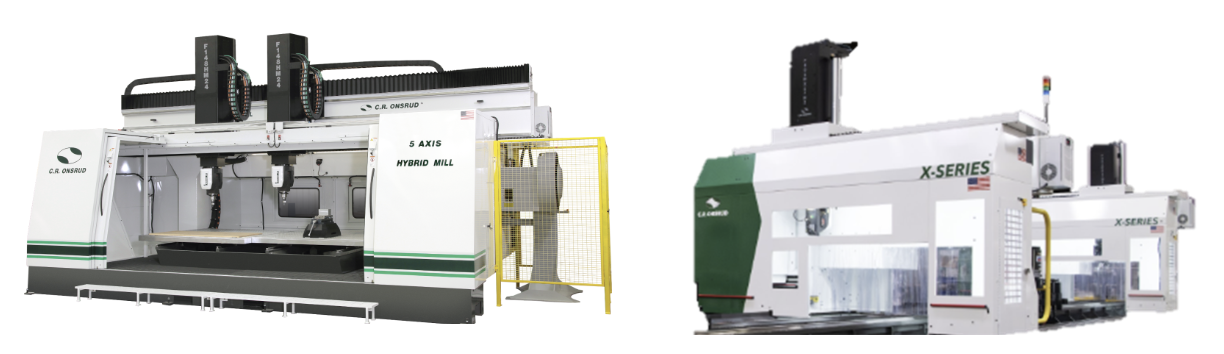 Turn one machine into two with dual-process technology
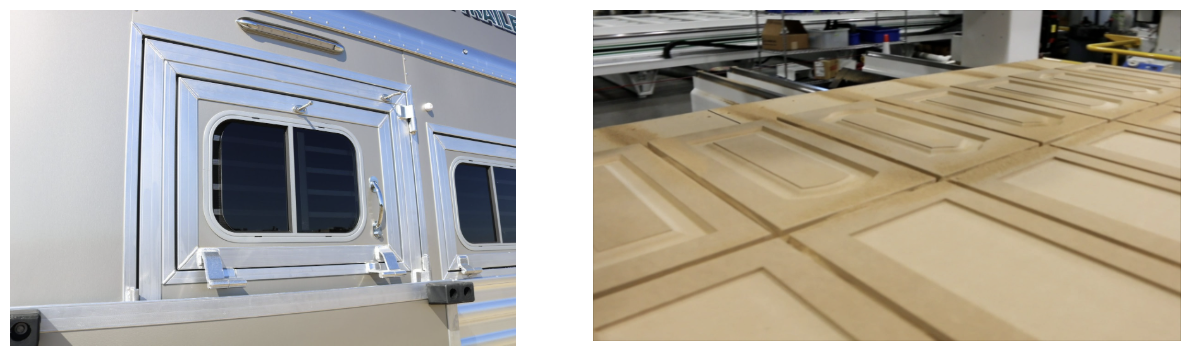 Doors, Hutches, Cabinetry, Interiors
Don’t go it alone
With a wide range of CNC machines on the market and even within one company, you don’t have to find all the answers yourself. Speak to CNC experts and, if possible, visit the factories of the ones you’re considering. Seeing the company and meeting the people standing behind the machine is often as important as the machine itself. A CNC expert who takes the time to learn your process and who understands your future vision can help guide you to the machine that is the right fit for you to reach your unique manufacturing goals.