To Create EV Battery Trays
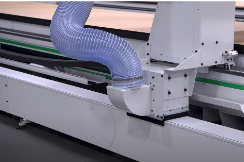
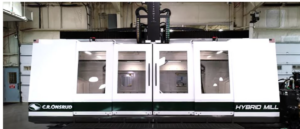
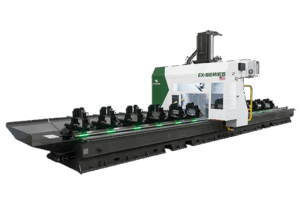
A C.R. Onsrud machine is used in two completely different manufacturing processes — Friction Stir Welding and Milling — to build, in this case, a battery tray for an electric vehicle, all in a single setup, on one machine (in this case, the CH-Series).

In a battery tray for an electric vehicle, battery components are protected within the hollow aluminum alloy shell, and the rigid structure serves as a foundation for the vehicle itself. These material and structural characteristics along with requirements for precision machining lend themselves to the Friction Stir Welding bonding technique.
Friction stir welding, or FSW, is a method that uses frictional heat and pressure to create strong, high-quality welds. This solid-state welding process is suitable for materials that are difficult to weld, such as aluminum alloys like we have here, copper, magnesium, titanium, steel, stainless steel, nickel, lead, zinc, and thermoplastics.
Friction Stir Welding is well suited for the aerospace, automotive, and marine industries and, as in the case of a battery tray for an electric vehicle, when you need a strong, defect-free bond without the added weight caused by bolts or rivets, for example, and without using flux, fillers, or shielding agents. Not only does it deliver higher joint strength than many other methods, but the fused area in most cases is stronger than the individual base materials due to refinement of the material’s grain structure from the friction stir welding process.
Typically, Friction Stir Welding is performed on a specialized machine and workpieces are moved to additional CNC machines for further machining. This means more material handling, changeover time, fixturing and set-up. However, C.R. Onsrud builds machines that are capable of all of those functions in order to produce a finished piece in a single setup.
By integrating FSW into the CH-Series, we eliminate the need for separate machines and complex material handling. The result is a significant reduction in changeover time and enhanced productivity. This capability not only increases throughput, but it also ensures exceptional weld quality and accurately machined parts which minimizes material waste and further reduces production costs, using a single operator and saving floor space, since no additional machinery is required.
CR Onsrud has a variety of 3- and 5-axis machines capable of this functionality and ranging in work envelopes from 4’ x 8’ to 20’ x 100’+. If you want to combine FSW with your milling, tapping, and sawing processes or have another manufacturing challenge and would like to see if we have a solution for you, please contact us at