



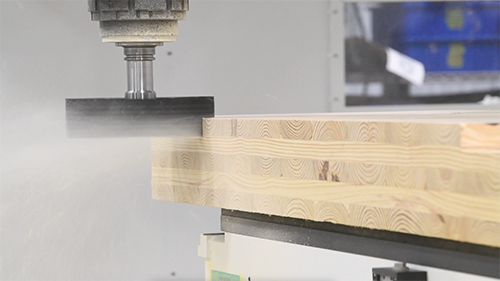


Manufacturers often struggle processing complex and large-format mass timber materials (e.g., cross-laminated timber (CLT), glue-laminated timber (Glulam), dowel-laminated timber (DLT), mass plywood panels (MPP), laminated veneer lumber (LVL), structural insulated panels (SIP), etc.), especially those who use traditional machining methods. CNC technology overcomes these challenges, but before investing in your first (or another) CNC machine for mass timber, make sure you’re making the right investment.
Start with the dimensions of your largest panel and select a work envelope accordingly. If you’re looking to machine the sides of the material, factor in the space needed when the machine’s spindle is angled at 90 degrees. Also ensure the machine and the machine’s spindle can support the size and weight of the heavy-duty tools required to process mass timber.
Large-capacity CNC machines for the mass timber industry.
(C.R. Onsrud’s American-made HR- and Wide G-Series shown here)
Consider also your production goals. Could you benefit from having a second spindle? Or from pendulum processing, where materials can be loaded and unloaded while the machine still performs cutting operations without interruption?
You don’t have to settle for an out-of-the-box machine. Your shop may be best served by a tailor-made solution.
Perform sawing, drilling, and milling operations in a single setup
Processing mass timber is demanding work. Too many CNC machines on the market fail because they are retrofitted to try to accommodate the material to make the sale. The best machines are designed from the ground up to specifically support mass timber.
The CNC machine should be structurally rigid, FEA-engineered, and made with premium, durable components. The sturdy design reduces vibrations and tool deflection to provide accuracy, top acceleration and deceleration speeds, maximum uptime, and low maintenance and repair costs over the lifetime of the machine.
Consistently reliable cuts, maximum material yield, and high-quality end products
Whether you’re working with harsh, difficult to cut material (e.g., CLT, Glulam, etc.) imperfections in wood-based materials, or mismeasured raw materials, you should feel confident in the quality of your end product.
Although there are many devices that can be integrated to improve accuracy, two examples include vision recognition and part-probing systems: Vision systems scan for reference points to identify a sheet’s position, automatically adjusting the program and tools paths to that position. Part-probing systems adjust the origin of parts prior to machining and perform in-process quality control, approving or rejecting a part before it is taken out of the work-holding.
Having a graphical interface that visually displays information in its proper location and orientation to your table can help as well, enabling you to easily shift parts (to avoid an imperfection in the material), tightly arrange (nest) parts for maximum material yield, remake a subset of parts, and much more.
To reduce error, look for automated systems for your specific application that require little operator input or intervention.
The best companies will offer tailored solutions that meet your needs and grow your business.
4. Versatility with CAD/CAM Software
A CNC machine does what it is programmed to do. It uses a standard programming language (G-code and M-code) generated from CAD/CAM software. Once you know these codes, you can easily send commands to the CNC machine from the controller or make changes in the program file (e.g., alter toolpaths, change speeds, select a different tool, etc.)
Be cautious of machines that require proprietary software packages. Since you cannot modify the source course, you are limited in what the machine can do, as well as held hostage to the software vendor’s costs, release schedule, and support.
Easily turn offcuts into sawdust or cut into small, manageable pieces
Wood-based construction materials produce a large amount of dust that can cause health problems to workers and damage to a CNC machine. Enclosures can be invaluable, although ensure your largest materials can still be easily loaded into the machining zone by a method that fits in the flow of your workspace.
Another concern is how to dispose of offcuts. CNC machines that support nesting operations optimize material yield to help reduce the amount of offcuts in the first place. Offcuts can also be turned into sawdust or cut up into smaller pieces for easy handling by a conveyor system. Some CAD/CAM programs make it easy to automatically chunk offcuts into smaller pieces for you. Note: Here is an example that unless it’s already part of the proprietary software package, you cannot change the source code to accommodate offcuts.
C.R. Onsrud’s factory-trained service tech support, in-person, and remote.
24/7 emergency support
Before making a purchase consider what is important to you when it comes to support and service.
Machine monitoring tools, such as Osync, can also help. By tracking run times and alarms, you can respond proactively to prevent issues before they grow into major problems.
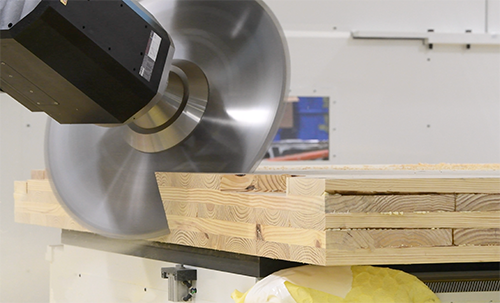
Powerful, high-speed sawing of thick CLT panel
For any challenges you’re facing, your CNC machine should be the solution. If you’re resorting to time-consuming manual workarounds, then you either need a CNC machine or you have the wrong one in your shop.
Learn more:
Choosing a Career with C.R. Onsrud
Why choose to work at Onsrud? We don’t build run-of-the-mill mills. We make cool CNC machines that process all types of materials with high-speed and accuracy – wood, foam, plastic,
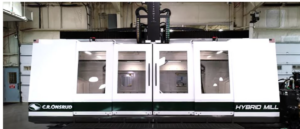
HM-Series High-Speed CNC 5-Axis Mill for Cutting Aluminum and Composite Material … FAST
Tom Lesch, Regional Sales Manager at C.R. Onsrud (Troutman, North Carolina) and Ken Stissel (National Sales Manager) talk about the HM-Series (a.k.a. Hybrid Mill) machining center, and how this machine might be able to help you and your company be more profitable in your manufacturing through accurate, high-speed, high rpm machining of aluminum and composite materials.
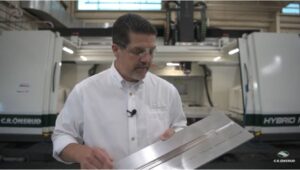
Friction Stir Welding & Machining on an Onsrud CNC Milling Machine
Ken Stissel with C.R. Onsrud (Troutman, North Carolina) offers a sneak peek into a super cool process — friction stir welding & machining on the same machine. Although he can’t
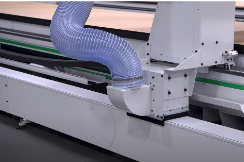
Benefits of a Floating Duct System for CNC Machines
Ken Stissel with C.R. Onsrud (Troutman, NC) discusses the benefits with a floating duct option for CNC machines with long travel. Advantages: C.R. Onsrud is known throughout the world as
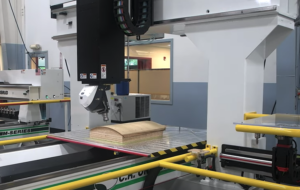
S-Series 3-Axis & 5-Axis CNC Machining Center
On the S-Series, the single table moves longways under the bridge, an ergonomic design that gives operators unobstructed access to three sides of the table for easy loading and unloading of large workpieces and tooling. It also allows for the easy integration of material-handling systems, transfer tables, and a wide range of automation alternatives.
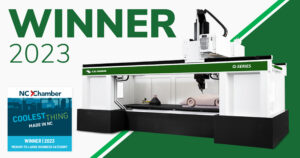
From a video showing FSW and milling on the same machine to manufacture battery trays for an electric vehicle on the CH-Series.